If you've been reading about SoftWave therapy in Eugene, two questions probably come up fast: will insurance pay for it, and what will it cost? SoftWave is a newer option for stubborn soft tissue pain, and most people want the practical details before committing to a series of sessions.
At Back2Strength, SoftWave therapy is led by Dr. Nicholas Brown, DC, MS, who holds a master's degree in sports medicine, with Dr. Andrew Huston, DC, MS and Dr. Jonathan Klopcic, DC, Cert. MDT. Below is a plain look at how insurance usually treats SoftWave, how pricing works at our clinic, what a session involves, and how to tell whether it's worth asking about for your injury.
Is SoftWave Therapy Covered by Insurance?
Usually not. SoftWave is not typically covered by insurance, and at Back2Strength we offer it as a self-pay treatment.
Part of the reason is how insurers classify shockwave therapy in general. Many plans consider extracorporeal shockwave therapy investigational for most musculoskeletal conditions, so they don't reimburse it even when a provider recommends it. Plans vary, so if you want to check yours, call the number on your insurance card and ask whether "extracorporeal shockwave therapy" is a covered benefit.
If you have a health savings account (HSA) or flexible spending account (FSA), ask your plan administrator whether it can be used for SoftWave. Rules differ from plan to plan, and they can give you a firm answer.
How Much Does SoftWave Therapy Cost?
We don't publish a single price, because the number of sessions depends on what's being treated. A plantar fasciitis case that has dragged on for a year and a newer shoulder strain won't need the same plan.
Here's how SoftWave pricing works at Back2Strength:
- SoftWave is offered in packages, so you know the cost of your full series before you start instead of paying session by session with no clear end point.
- We go over everything with you before treatment begins: how many sessions we recommend, what the package costs, and what we're aiming to change.
- If SoftWave isn't a good fit for your injury, we'll tell you and talk through the other care we offer.
When you compare SoftWave therapy cost between clinics, ask what's included, such as an assessment, and whether SoftWave is part of a wider care plan.
What Is SoftWave Therapy?
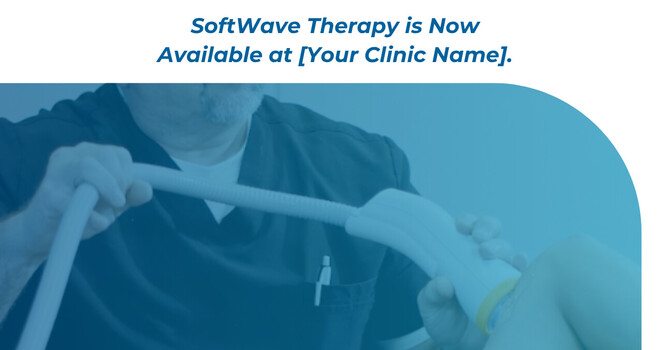
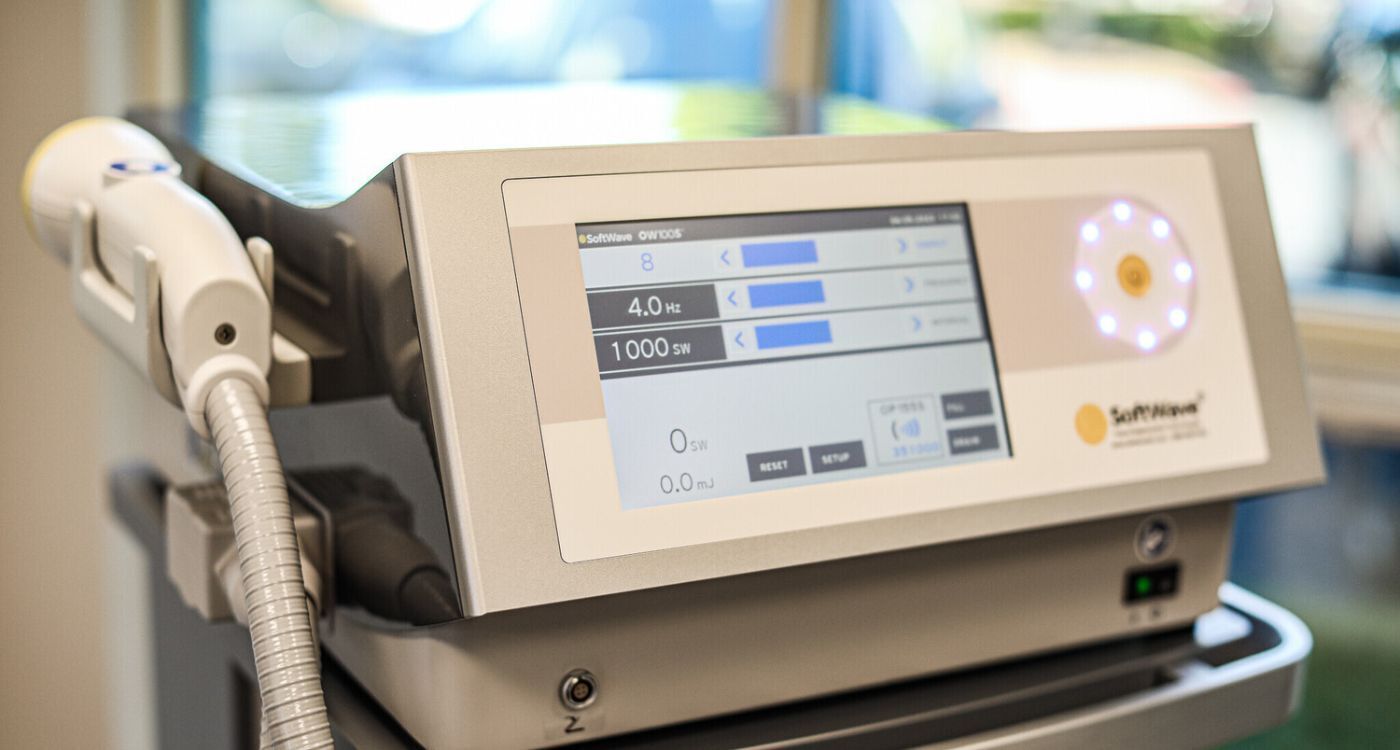
SoftWave TRT is a form of extracorporeal shockwave therapy. A handheld applicator sends acoustic (sound) waves through the skin into injured tissue. SoftWave uses a broad, unfocused wave, so it covers a wider area than many focused shockwave devices.
The treatment is designed to stimulate the body's own healing response. SoftWave describes the effects as improved local blood flow, activation of connective tissue, and recruitment of the body's repair cells, including stem cells. Research on exactly how shockwave therapy works is still developing, and results vary from person to person.
On the regulatory side, SoftWave's OrthoGold 100 device received FDA 510(k) clearance in 2021 for a temporary increase in local blood circulation, relief of minor aches and pains, and activation of connective tissue (SoftWave's FDA clearances). FDA clearance is not the same as FDA approval, and it doesn't mean the device is cleared to treat a specific diagnosis.
Which Conditions Do We Use SoftWave For?
Dr. Brown uses SoftWave most often for soft tissue problems that have lingered or haven't fully responded to other care, including:
- Plantar fasciitis and heel pain
- Shoulder pain, including rotator cuff problems
- Knee pain, including patellar tendon pain (jumper's knee)
- Tennis elbow and golfer's elbow
- Achilles tendon pain
- Hip pain and bursitis, and IT band syndrome
- Neck and upper trap tension, and chronic low back muscle pain
- Scar tissue, old injuries that still feel restricted, and pain after surgery
The patients we see it suit best are athletes, weekend warriors, people whose pain has outlasted the usual fixes, and people recovering from car accident injuries.
Shockwave therapy has been studied most for chronic plantar fasciitis. A 2022 systematic review found moderate evidence that it improves pain and foot function in that group (Melese et al., 2022). That research covers shockwave therapy broadly rather than SoftWave specifically, and it doesn't mean every patient will respond the same way.
What a SoftWave Session Looks Like
Assessment first. Before any treatment, one of our chiropractors assesses the injury, reviews your health history and checks that SoftWave is appropriate for you. Some medical conditions mean shockwave therapy shouldn't be used, which is why screening comes before the first session.
The treatment. SoftWave is done right here in the office and takes only a few minutes. The applicator is moved across the skin over the treatment area. There are no needles, no incisions and no anesthesia.
Afterward. There's no downtime, so you can go straight back to your normal activity. Most patients complete a short series of sessions, and your chiropractor will give you a specific recommendation at the assessment. Reported side effects of shockwave therapy are generally minor and short-lived, such as temporary soreness or redness in the treated area (Roerdink et al., 2017).
Why SoftWave Works Best as Part of a Plan
A tendon that won't settle usually has a movement or loading problem behind it. Because Back2Strength has chiropractic care, spinal rehabilitation and massage therapy under one roof, SoftWave can be one part of your care instead of a standalone fix.
Eric Clausen, CSCS, can build the strength side in our rehab center, and Marci Martin, LMT, who has worked in Eugene chiropractic settings since 1996, can address the surrounding soft tissue. With two sports medicine master's degrees on the team, active patients and sports injuries make up much of our SoftWave work.
Is SoftWave Therapy Worth It?
It depends on the injury. SoftWave is worth asking about if you have a soft tissue problem that has lasted for months, keeps coming back when you get active again, or hasn't fully responded to rest, stretching or other care. It's a less obvious fit for a fresh injury that's still settling on its own, or for pain where the cause hasn't been worked out yet.
The simplest way to find out is an assessment. We'll look at the injury, tell you honestly whether SoftWave makes sense, and lay out the package cost before anything starts.
Ready to find out whether SoftWave therapy is right for your injury? Send us a message through our contact form and our Eugene team will get back to you.
Frequently Asked Questions
How Many SoftWave Sessions Will I Need?
Most patients complete a short series of in-office sessions. The exact number depends on the condition, how long you've had it and how the tissue responds. You'll get a recommendation and the package cost at your assessment.
Can I Keep Working Out After a SoftWave Session?
There's no downtime after SoftWave, so most people go straight back to normal activity. If you train hard or play a sport, your chiropractor may adjust your training load while the area recovers.
Is SoftWave the Same as Sofwave?
No. Sofwave is a cosmetic skin treatment with a similar name. SoftWave TRT, which we use at Back2Strength, is a shockwave therapy for musculoskeletal pain and soft tissue injuries.
Do I Need Insurance to Get SoftWave at Back2Strength?
No. SoftWave is a self-pay treatment at our clinic, offered in packages, and we go over all costs with you before your first session.
This article is for general information and isn't a substitute for an individual assessment. Results vary from person to person.